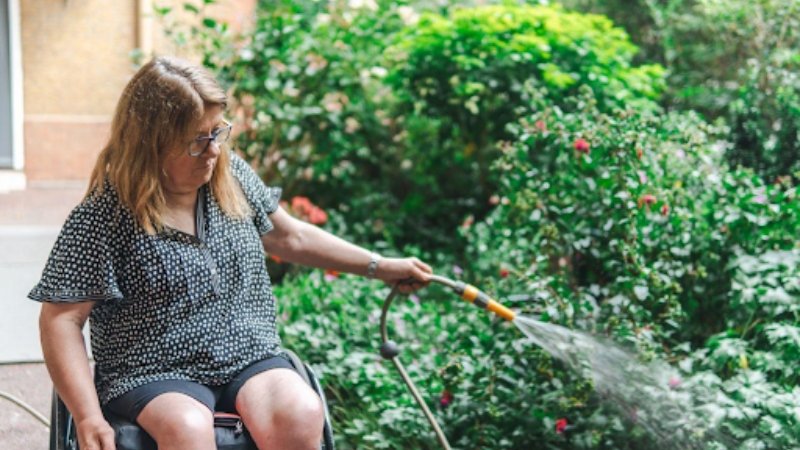
A nice outdoor space should make every person who enters the space feel comfortable. Many porches and decks seem to say that every visitor can climb steps, carry items over ground, or walk past planters. For people who use wheelchairs, walking sticks, or who get tired easily, these small challenges add up.
The good news is that designs that include everyone usually do not look rigid or formal. When done well, designs just feel pleasant for everyone. The outside space can then be a place where everyone feels welcome.
Start with Level, Stable Ground
Surfaces are the foundation. Make sure the path from the house to the area is smooth and steady. Try to keep it flat with no steps or lips at the door. If you can’t avoid a change in height, a sloped ramp is much safer than a step.
Pick materials that stay underfoot. Smooth concrete, laid pavers, and strong decking are good choices. Avoid gravel, deep mulch, or wide spaces between boards. These can catch wheels and walking aids. Also pay attention to slip resistance, especially when the surface gets wet. A safe surface helps everyone move easily and without risk.
Allow Plenty of Room to Move
Space is often not given thought. A simple idea is that paths need to be wide enough so that a wheelchair can easily pass by with at least one metre of space. A clear space of 1.5 metres makes it possible for someone to turn around. Consider how the furniture is placed. Make sure there are spaces between tables and chairs so that people can move without asking others to move.
Raised planters, at a height, are a smart choice. They help people garden without having to bend or kneel. They bring greenery into the area without taking up space on the walkway.
Think About Shade, Shelter, and Weather
Heat, glare, and sudden rain can make a difference for some people. A dependable cover helps keep the space usable on sunny days. A motorised louvered awning is one feature that works well for many. The louvers can be tilted to let in light or block the sun as needed. With wall control, there’s no need to struggle with cranks or climb ladders. For anyone who has trouble with strength or grip, this kind of system makes a change.
Whatever you choose, position controls at a sensible height. Keep them simple to operate, and everyone will be happy.
Choose Furniture That Supports Everyone
Comfortable seating should have chairs with backs and armrests. These features help people stand up easily. Avoid chairs that’re too low or too deep because they can be hard to get out of. Tables need to be set so there is knee space underneath. This allows wheelchair users to get close to the table. Lightweight furniture is easier to move, but stability is more important. Wobbly furniture is dangerous for people who need to lean on it for support.
Ask the People Who Will Use It
People who live with mobility challenges every day give advice. We have seen how mobility challenges shape choices. When designing for a family member or friend, think about mobility challenges from the start. Choices about seating height, door width, and shade made by people with mobility challenges reveal more than any checklist can.
Accessibility matters a lot. An outdoor area that works for abilities today will probably serve you well as your needs change. Accessibility is key. Design the area with care. The outdoor area becomes a place where everyone can simply sit, relax, and enjoy being outside.