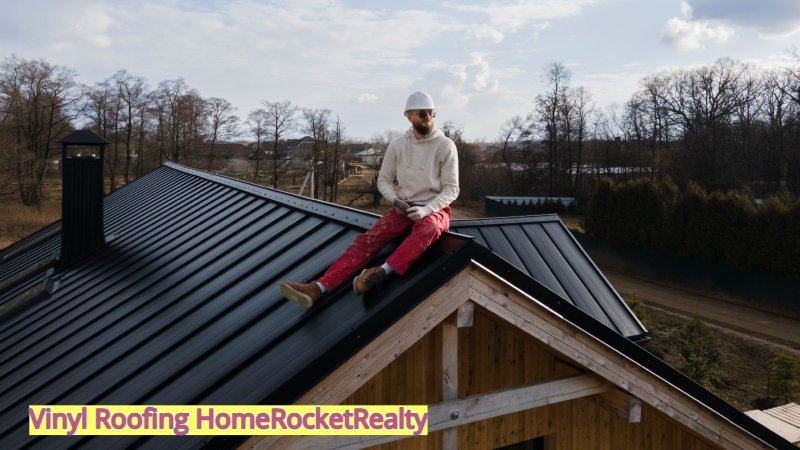
Picking a roof isn’t the kind of decision you want to get wrong. You want something that keeps the rain out, doesn’t need constant babysitting, and still makes sense a decade from now. If you have a flat or low-slope roof, vinyl roofing is worth a serious look. It’s usually a PVC (polyvinyl chloride) membrane, and it’s popular because it’s waterproof, its seams are heat-welded, and it holds up well against certain chemicals. That’s why you’ll find it on both homes and commercial buildings. In this Vinyl Roofing HomeRocketRealty guide, we explore how vinyl roofing works, its advantages and disadvantages, installation requirements, maintenance needs, and the factors that influence its cost in 2026.
What exactly is vinyl roofing?
Forget shingles for a second. Vinyl roofing means PVC (polyvinyl chloride), and it comes as a flexible, single-ply sheet that covers your roof in one continuous waterproof layer. You’ll mostly see it on flat and low-slope roofs, where water can’t just run off on its own, so good drainage and tight seams matter a lot. Installers attach it with mechanical fasteners, adhesives, or whatever system the manufacturer approves.
The feature that really sets it apart is the heat-welded seam. Instead of just gluing sheets together, the installer fuses them into one piece. Done properly, that’s a very strong join and a real cut in leak risk.
One thing to clear up early: vinyl roofing is not vinyl siding, and it’s not decorative vinyl roof tiles either. Before you start comparing prices or performance, make sure you know exactly which product and system each contractor is quoting.
Benefits of this Roofing in 2026
Vinyl roofing has real strengths, but how well it works for you depends on your building, your climate, the quality of the install, and the membrane you choose.
- It keeps water out
That’s the main job of a PVC membrane, and welded seams do it well when the installation is done right. But don’t expect the membrane to rescue a bad setup. If the slope is poorly designed, the drains are blocked, or the flashing is damaged, you’ll still end up with leaks.
- It’s built to take the weather
Good PVC systems are made to handle sun and changing conditions year after year. How long they hold up depends on the membrane formulation, its thickness, how it was installed, and how well you look after it. Some versions also resist grease and certain chemicals, which is why they show up on restaurants and other commercial buildings.
- It may help cut cooling costs
White or reflective membranes bounce a lot of sunlight away, so the roof surface stays cooler on hot days. In the right building, that can ease the load on your air conditioning. Just don’t count on a fixed number. Your actual savings depend on insulation, ventilation, climate, electricity rates, and how efficient your AC is, so no one can promise a specific drop in your bills.
- It doesn’t ask for much upkeep
Compared with some traditional roofing, vinyl needs less routine attention. You’ll still want occasional inspections, a bit of debris cleanup, a look at the drains, and quick repairs when something goes wrong. Low maintenance is not the same as no maintenance, so don’t set it and forget it.
Vinyl roofing cost in 2026
There’s no one price that fits every roof, and anyone who quotes you a number without seeing your roof is guessing. The final bill swings a lot depending on roof size, membrane thickness, local labor rates, the condition of your current roof, and how tricky the job is. Your best bet is to skip the “national average” and get itemized estimates from a few local roofers.
Here’s what usually moves the budget:
- Roof size. A bigger roof means more membrane and more labor.
- Material quality. Membrane specs, reinforcement, and the product warranty all affect the price.
- Roof prep. Damaged decking, wet insulation, or tearing off the old roof will add to the total.
- Complexity. Skylights, drains, rooftop equipment, and odd roof shapes all take extra work.
- Permits and warranties. Local building rules and longer coverage can add fees.
When quotes come in, check that each one includes removal and disposal, insulation, flashing, drainage improvements, labor, and a final inspection. If one quote is much lower than the others, it’s often because something is missing from it.
And the cheapest quote isn’t always the best deal. A roof installed properly with compatible materials usually costs less in the long run than one that needs repairs every couple of years.
Vinyl roofing pros and cons
Before you commit, it helps to see the good and the bad side by side.
What’s good?
- One continuous waterproof layer across the whole roof
- Heat-welded seams that make strong, dependable joins
- Reflective colors that cut down on heat absorption
- Resistance to certain chemicals and weather exposure
- Fairly light routine maintenance
What’s not so good?
- The upfront cost can be higher than some other options
- Sharp objects, heavy foot traffic, or sloppy repairs can damage the membrane
- You need trained installers with the right equipment, so this isn’t a DIY job
- Results vary depending on product quality and roof design
- Bad drainage or neglected flashing can still cause leaks
Weigh these against your budget and your building, and you’ll have a much clearer idea of whether vinyl is the right fit.
How long does this roofing last?
Honest answer: it depends. Some PVC systems are designed to last for decades, but there’s no single number that fits every membrane. Lifespan comes down to the formulation, the thickness, how well it was installed, how much weather it takes, and how it’s been looked after over the years.
It also helps to know that a warranty and a roof’s real service life are two different things. A long warranty doesn’t mean the roof will last that long, so read the fine print.
To get the most out of your roof, keep the drains clear, schedule regular inspections, and deal with damaged seams or punctures quickly before a small problem turns into a leak.
Before you sign anything, ask your contractor:
- How long the product is expected to last
- What the warranty doesn’t cover
- What maintenance you’re responsible for
- How repairs are handled
Vinyl Roofing vs. TPO and EPDM
Vinyl roofing is not the only membrane option available for flat and low-slope roofs. TPO and EPDM are also widely used.
| Feature | PVC (Vinyl) | TPO | EPDM |
| Material | Polyvinyl chloride | Thermoplastic polyolefin | Synthetic rubber |
| Seam methods | Commonly heat-welded | Commonly heat-welded | Commonly adhesive or tape-based |
| Key strength | Chemical resistance in suitable systems | Reflective options and versatility | Flexibility and established performance |
| Main consideration | Product and installation cost | Formulation and installation quality | Seam details and compatibility |
| Best choice | Depends on building requirements | Depends on building requirements | Depends on building requirements |
No material is universally best. Compare the roof’s intended use, local weather, insulation requirements, contractor expertise, and total installed cost before deciding.
Vinyl roofing installation and maintenance
A good install starts well before the membrane goes down. The crew inspects the roof deck, fixes any structural problems, and prepares a clean, suitable surface. Then they lay the specified insulation and membrane, fasten the sheets, and seal the seams exactly as the manufacturer instructs.
Pay extra attention to the flashing around drains, vents, skylights, and roof edges. These are the spots where leaks like to start, so it’s worth asking your contractor how they handle them.
Once the roof is on, a simple routine keeps it in good shape:
- Inspect it at least twice a year, and again after any major storm.
- Clear leaves and debris, but never with tools that could puncture the membrane.
- Look over the drains, seams, flashing, and roof penetrations for visible damage.
- Call a professional for loose seams, punctures, or leaks that keep coming back.
- Keep your installation records and warranty papers somewhere safe, since you’ll need them for future repairs or if you sell the property.
Also, stay off the roof unless you have to be up there, and don’t use random sealants. Repairs should follow what the membrane manufacturer recommends.
Is vinyl roofing worth it in 2026?
For flat and low-slope buildings that need a tough membrane system, it often is. The waterproofing, welded seams, and reflective options bring real, practical benefits, as long as the product actually suits your project.
But don’t let material price make the decision for you. Roof design, installation quality, drainage, warranty terms, and long-term upkeep all affect how much value you get in the end. A cheap roof that’s poorly installed will cost you more than a pricier one done right.
If you’re planning to sell, hold on to your roofing invoices, inspection reports, and warranty paperwork. They help buyers understand what condition the roof is in, though they won’t guarantee a higher sale price.
(FAQS)
Is vinyl roofing homerocketrealty suitable for residential homes?
Yes. PVC membrane roofing can be suitable for residential properties with flat or low-slope roofs when the system is designed and installed correctly.
Does vinyl roofing reduce energy costs?
Reflective membranes may reduce heat absorption and cooling demand, but actual savings vary by building and climate.
Can vinyl roofing HomerocketRealty be repaired?
Yes. Many PVC membranes can be repaired using compatible, manufacturer-approved techniques. A qualified contractor should assess extensive damage or recurring leaks.
How do I choose a vinyl roofing contractor?
Compare written estimates, relevant installation experience, product specifications, insurance, workmanship warranties, and references from similar projects.
Final Thoughts
Vinyl roofing offers a practical option for homeowners seeking waterproof protection and manageable maintenance. By understanding its costs, benefits, limitations, and alternatives, property owners can make better-informed roofing decisions in 2026.
For the best results, compare suitable roofing systems, consult qualified local contractors, and choose a product that matches your building’s needs rather than relying on price alone.
Want to explore more helpful guides like this? Check out Global Life Mag for more details.